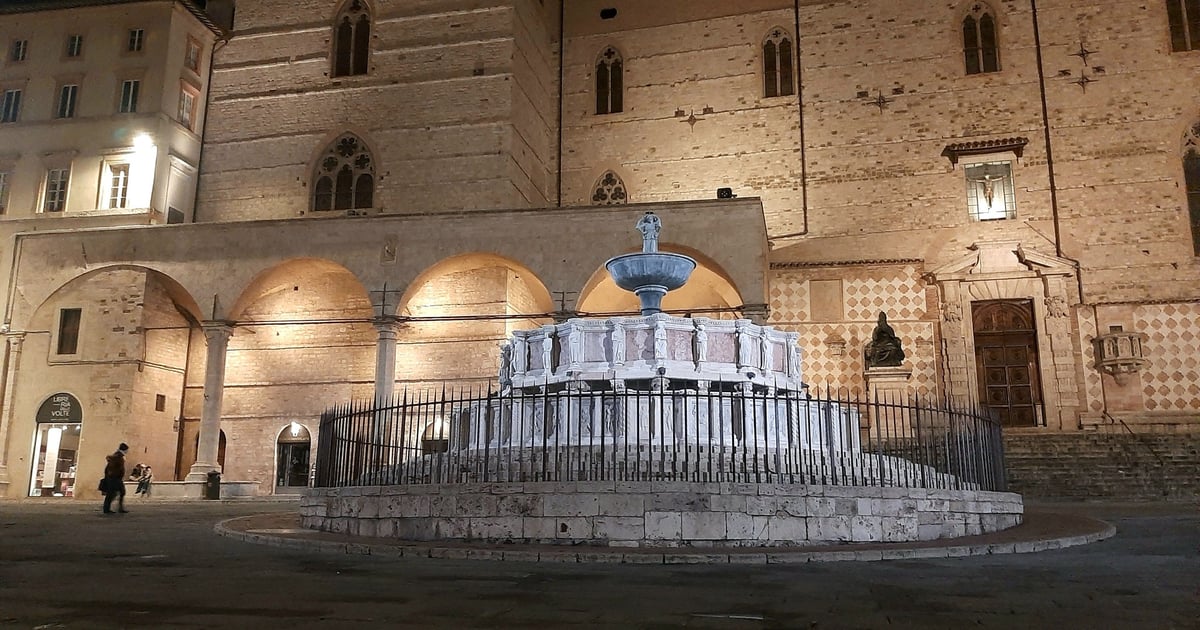
Fontana Maggiore: a medieval masterpiece in Perugia
In Piazza IV Novembre stands one of the greatest works of medieval Italian art: the Fontana Maggiore. A symbol of Perugia and its historic prestige, the fountain blends engineering and sculpture. For context, start with Perugia: what to see.
History and meaning
The fountain was built between 1275 and 1278 to celebrate the arrival of drinkable water via the medieval aqueduct. Nicola and Giovanni Pisano created a complex work with two polygonal marble basins and a bronze cup at the top, once a symbol of life and prosperity.
An open-air museum
The carved panels are a stone book: biblical scenes, the founding of Rome, zodiac signs, allegories of the liberal arts and mythological figures. Each detail communicated a message to medieval citizens and visitors.
Why visit
Walking around the fountain lets you admire its intricate sculptures and craftsmanship. The surrounding square is one of Perugia’s most evocative places, framed by the Palazzo dei Priori and the Cathedral of San Lorenzo. A coffee break here is part of the experience.
Where to stay in Perugia
For a central base, WellStay Perugia Downtown is ideal. It is close to the fountain and the main sights, and also convenient for those connected to the University for Foreigners.
Conclusion
The Fontana Maggiore is more than a monument: it is a symbol of Perugia’s history and identity. If you have time, also read about the 100 years of the University for Foreigners.
Details to notice
Look for the bas‑reliefs: months of the year, zodiac signs, biblical scenes and trades. Take your time to read the “stone encyclopedia”.
Best time for photos
- Early morning: soft light, fewer people
- Sunset: warm tones on the stone
- Night: dramatic lighting and atmosphere
How to fit it into your itinerary
Visit it first, then continue toward the Cathedral or Palazzo dei Priori. Or return in the evening to see it with fewer crowds.
Quick FAQ
How much time do you need? 15–20 minutes are enough, more if you love details.
Curiosities and symbols
Agricultural symbols and the cycle of the months show how medieval life followed nature. This makes the fountain more than just a monument.
Is a guided visit worth it?
If you like history, a short explanation adds a lot. Otherwise read a brief summary before arriving to recognize the main details.
Final tip
Come back at a different time of day. The fountain changes with light and crowds. If you love details, bring a small note of the main symbols to spot them.