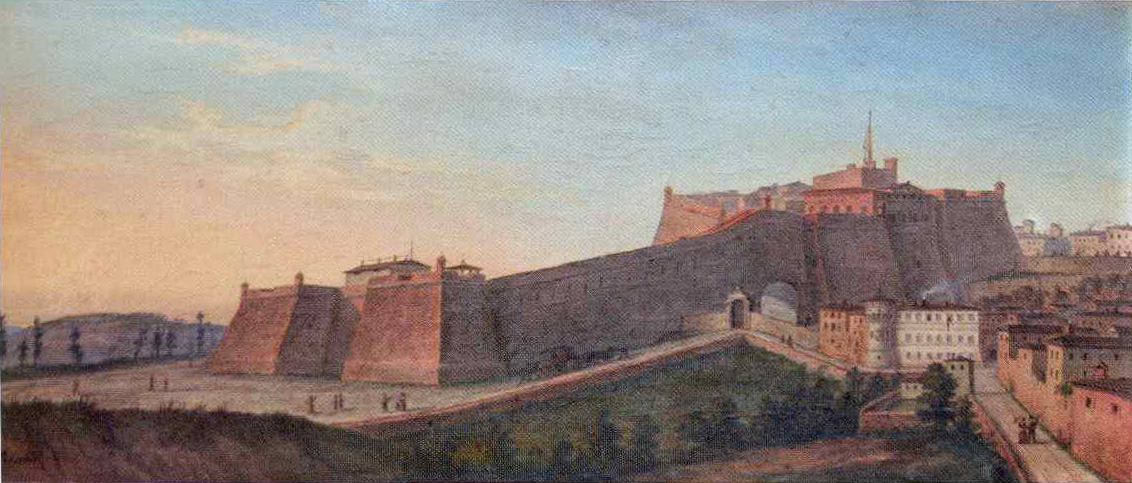
The fall of Rocca Paolina: Perugia’s revenge
Built in 1543 to dominate Perugia, the Rocca Paolina was a symbol of oppression for centuries. In the 19th century the city finally destroyed the fortress. The demolition was not only physical, but moral and symbolic: a recovery of identity.
A hated symbol of power
From the beginning, the Rocca was never felt as “Perugian.” It was imposed by the pope, built by razing houses, towers, palaces, churches and monuments of powerful families like the Baglioni. The Porta Marzia district disappeared: 121 houses, 20 towers and 6 churches were destroyed to make room for the new fortress. A living part of the city was erased.
A slow decline
Over time the Rocca lost its military role. As Italian unification approached, papal power weakened, and resentment returned among citizens. By 1859 the change was in the air, and the following year the turning point arrived.
1860: liberation and demolition
On September 14, 1860, Piedmontese troops entered Perugia. As papal authority ended, citizens attacked the walls. The statue of Paul III was torn down and the first blocks were removed by hand. The population did not just want to damage the fortress; they wanted to erase it, uncovering what had been buried. The demolition became a ritual of purification.
A district never rebuilt
The medieval quarter was never reconstructed. Instead, Giardini Carducci and 19th‑century buildings rose above. The underground lanes of the Rocca were left intact as silent witnesses. For other hidden routes, see Perugia’s winding streets.
From prison to collective memory
Walking through the Rocca today, you can still feel the echo of anger, but also dignity. Perugia chose not to forget, but to reclaim its history.
Historical curiosities
The statue of Paul III was decapitated and never restored. Some citizens kept blocks of stone as souvenirs of liberation. Giardini Carducci are named after the poet Giosuè Carducci, who celebrated the city’s liberation.
Where to stay
📍 WellStay Perugia Downtown: steps from Giardini Carducci and the upper Rocca area. 📍 WellStay Perugia Train Station: ideal if you want to enter the Rocca from the lower level and walk up toward the center.
Demolishing the Rocca Paolina was more than destroying a fortress: it was freeing the city and rebuilding its identity. For a broader picture, see Perugia: history, art and daily life.