Rocca Paolina: Perugia’s underground city
Perugia is made of layers, in geography and history. No place shows this better than the Rocca Paolina, built in the 1500s by Pope Paul III to control a rebellious city. What remains today is a fascinating underground city, where you walk through embedded alleys, medieval arches and silent walls. If you love hidden routes, see Perugia’s winding streets.
A fortress built to dominate
Built between 1540 and 1543 after the Salt War, the Rocca Paolina destroyed an entire district—the Baglioni quarter, once home to local noble power. The fortress, designed by Antonio da Sangallo the Younger, was meant to be a city above the city, a daily reminder of papal authority.
A city within the city: underground alleys
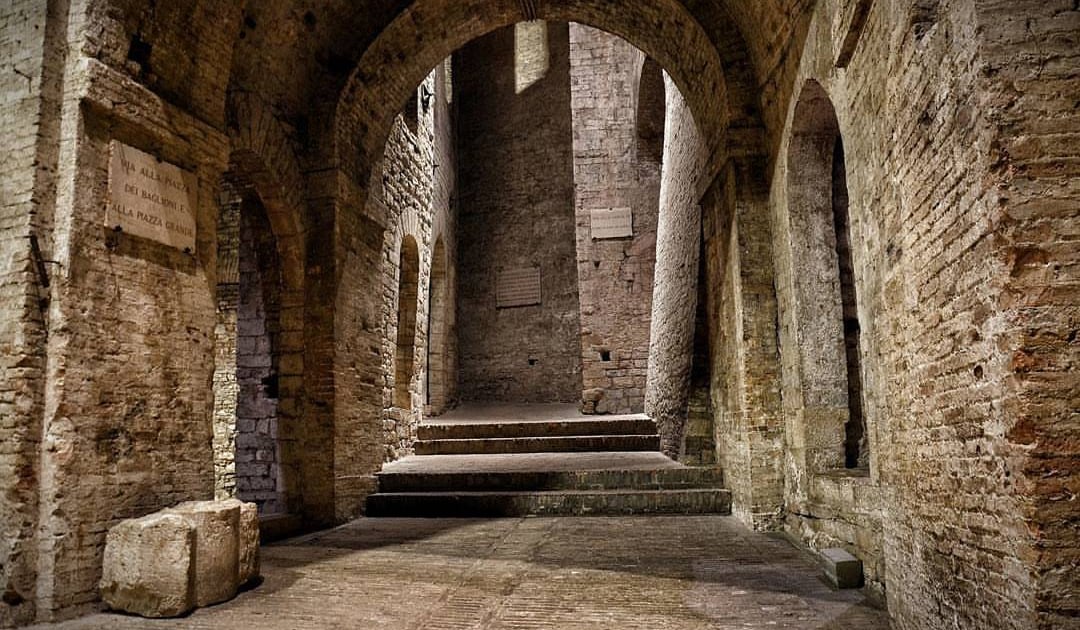
The most evocative part is what remains beneath. Using the escalators connecting Piazza Partigiani to the center, you enter a network of medieval streets absorbed into the fortress. It feels like walking through a ghost district: stone walls, arches, old doorways and a small chapel, lit with a dim, cinematic glow.
A place of passage and memory
Today the Rocca is a daily passage for locals and a cultural space with exhibitions and events. It is an example of how a place born from oppression can be returned to the community. For a wider context, see Perugia: history, art and daily life.
Curiosities
The Rocca had secret tunnels, storage rooms, prisons and hidden exits. Some sections are still unexplored. The statue of Pope Paul III was destroyed by Perugians at the first opportunity. Visitors are often struck by the silence and the scent of stone and history.
Visiting Rocca Paolina
Free access Open every day Enter via escalators from Piazza Partigiani or from Corso Vannucci (near Giardini Carducci) Ideal on hot or rainy days
Where to stay
📍 WellStay Perugia Downtown: a short walk from the upper entrance. 📍 WellStay Perugia Train Station: convenient for those arriving by train and entering from Piazza Partigiani.
Rocca Paolina is more than a monument: it is a journey through time. If you have an extra day, pair the visit with the Trasimeno hills.